
Vacuum Decay Leak Testing Solution for Reliable Package Integrity
A vacuum decay leak testing solution plays a critical role in modern pharmaceutical and medical packaging quality assurance. Sterile products rely on intact container–closure systems to maintain sterility, protect physicochemical properties, and ensure patient safety throughout their lifecycle. Even microscopic leaks can compromise product quality by allowing microbial ingress, gas exchange, or product loss. As regulatory expectations evolve, manufacturers increasingly adopt deterministic, quantitative leak testing methods to replace subjective or destructive techniques.
Vacuum decay technology has become one of the most widely accepted approaches because it provides non-destructive, repeatable, and highly sensitive detection of package leaks. By measuring pressure changes in a sealed test chamber under vacuum, this solution directly evaluates container–closure integrity without relying on dyes or visual interpretation.
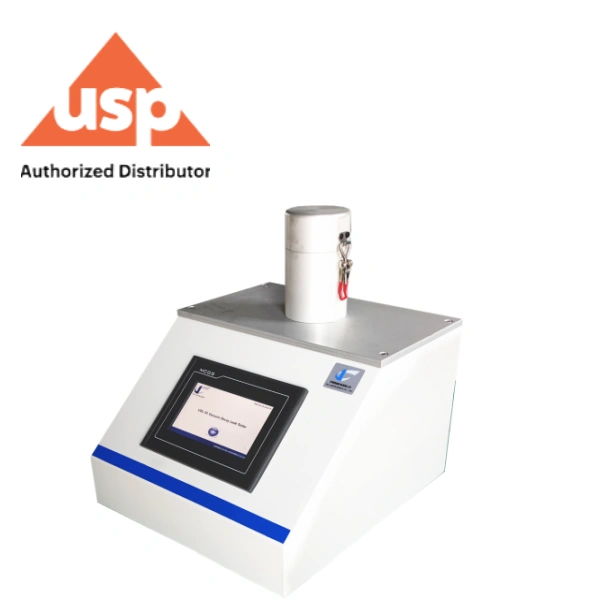
Leak Test for Ampoule and High-Risk Primary Packaging
Leak test for ampoule applications demand exceptional sensitivity. Glass and plastic ampoules often rely on fused seals or form-fill-seal processes, where even sub-micron defects may pose sterility risks. Traditional methods such as dye ingress can miss these defects or introduce variability due to operator judgment.
A vacuum decay leak testing solution applies a controlled pressure differential across the ampoule wall and seal area. If a leak exists, gas flows from the package into the evacuated chamber, causing a measurable pressure rise. This approach aligns with deterministic principles described in USP 1207, which emphasizes quantitative, science-based methods for package integrity evaluation.
For ampoule manufacturers, vacuum decay testing supports development validation, routine quality control, and stability studies. It also enables correlation between measured leakage rates and defined maximum allowable leakage limits, strengthening risk-based decision making.
How Vacuum Decay Technology Works in Practice
The core principle behind a vacuum decay leak testing solution remains straightforward yet powerful. The test chamber encloses the package, then evacuates to a predefined vacuum level. After isolation, the system monitors pressure changes over time. Stable pressure indicates an intact package, while pressure increase signals leakage.
This method functions as a leak test NDT technique because it does not damage the sample. Manufacturers can return tested units to production lots during validation or use them for further analysis. The absence of tracer gases or liquids also simplifies operation and reduces contamination risks.
Vacuum decay testing detects a wide range of leak types, including pinholes, micro-cracks, and seal imperfections. Its sensitivity suits both rigid containers such as vials and ampoules, and semi-rigid packaging used in pharmaceuticals and medical devices.
Alignment with USP 1207 and Regulatory Expectations
USP 1207 establishes a comprehensive framework for package integrity testing across the product lifecycle. It defines container–closure integrity as the absence of leaks that could compromise sterility or product quality, rather than a simple pass/fail microbiological challenge.
Within this framework, vacuum decay methods fall under deterministic leak test technologies. They provide numerical outputs, such as pressure change or calculated leakage rate, enabling method validation, trend analysis, and risk assessment. This data-driven approach supports compliance with GMP requirements and regulatory inspections.
By adopting a vacuum decay leak testing solution, manufacturers demonstrate proactive alignment with USP 1207 principles, particularly in method selection, validation, and lifecycle management of package integrity.
Micro-Leakage Device for High-Sensitivity Detection
A modern Micro-leakage device based on vacuum decay technology offers enhanced resolution for detecting extremely small defects. These systems combine high-precision pressure sensors, stable vacuum control, and intelligent algorithms to distinguish real leaks from environmental noise.
Micro-leakage devices suit applications where sterility assurance margins remain narrow, such as injectable drugs, ophthalmic solutions, and biologics. They also support comparative studies during packaging design, helping engineers optimize materials, seal parameters, and closure systems.
Cell Instruments integrates these capabilities into its micro leak tester portfolio, providing flexible test configurations for different package sizes and formats. This adaptability proves valuable for laboratories handling diverse product lines.
Advantages over Traditional Leak Test Methods
Compared with dye ingress, bubble emission, or microbial challenge tests, a vacuum decay leak testing solution offers clear advantages. It delivers objective results, reduces operator dependence, and shortens test cycles. Because the method works without liquids or dyes, it eliminates post-test cleanup and sample disposal concerns.
As a leak test NDT approach, vacuum decay also supports continuous improvement initiatives. Manufacturers can monitor leakage trends, correlate results with process parameters, and implement corrective actions before failures occur in the field.
Practical Applications Across the Product Lifecycle
Vacuum decay testing supports package integrity verification from early development through commercial production. During R&D, it helps screen packaging concepts and closure designs. In validation, it establishes acceptance criteria and confirms method suitability. During routine quality control, it verifies that every batch meets defined integrity requirements.
For ampoules, vials, prefilled syringes, and other sterile containers, this solution strengthens confidence that products remain safe and effective through expiry and end use.
Conclusion
A vacuum decay leak testing solution represents a robust, regulatory-aligned approach to container–closure integrity testing. By supporting sensitive leak test for ampoule applications, complying with USP 1207, and functioning as an effective leak test NDT method, vacuum decay technology meets the demands of modern pharmaceutical quality systems.
With advanced Micro-leakage device designs from Cell Instruments, manufacturers gain reliable tools to protect sterility, ensure compliance, and safeguard patient health across the entire product lifecycle.
 EN
EN  AR
AR  BG
BG  CS
CS  DA
DA  DE
DE  EL
EL  ES
ES  ET
ET  FI
FI  FR
FR  HU
HU  ID
ID  IT
IT  JA
JA  KO
KO  LT
LT  LV
LV  NB
NB  NL
NL  PL
PL  PT
PT  RO
RO  RU
RU  SK
SK  SL
SL  SV
SV  TR
TR  UK
UK  HE
HE  TH
TH  VI
VI